
With a luxury property, the square metres and the list of materials are not what decides. What decides is whether the buyer can picture living there.
A photograph can only take that so far. It captures composition, light in a single instant, the quality of a surface. It shows how a space looks. It cannot show what it is like — how you move through it, how it changes across the day, what you hear when the terrace doors open.
That gap is precisely why premium properties are increasingly presented through film rather than a gallery of photographs.
A photograph stops you, a film takes you through
Someone buying a luxury property does not browse listings the way someone looking for a small flat does. They are not comparing specifications. They are looking for a place that fits them, and that decision is made on feeling long before it is made on a spreadsheet.
Film gives them what a photograph cannot: sequence. The approach to the house, the passage through the entrance hall, the moment the view opens up. The space unfolds in time, in an order you chose. The buyer does not see rooms side by side — they see the route they will walk when they come home.
A viewing works the same way. The difference is that a film can be sent, while a viewing has to be arranged.
Emotion arrives before argument
A buyer needs rational reasons only once they have already decided the property interests them. Price, layout, condition and energy rating confirm or overturn a decision. They do not start one.
What starts it is less measurable. Light crossing the living room in the late afternoon. Quiet in a bedroom. The reflection in the pool once the surface settles. A photograph freezes these; a film lets them run — and it is in that movement that a space becomes a home.
People do not buy a property. They buy the picture of the life they will live in it.Satori Visuals
That is why we never begin by asking how many shots fit into a minute. We ask which moment in the house deserves to be the first one the buyer sees.
What film shows and photography cannot
Scale. A photograph either exaggerates a large space or loses it. Camera movement gives a ceiling its real height and a corridor its real length.
Relationships. How the living room meets the terrace, the terrace the garden, the garden the view. In luxury architecture these connections are often the most valuable thing there is, and in stills they break apart into separate frames.
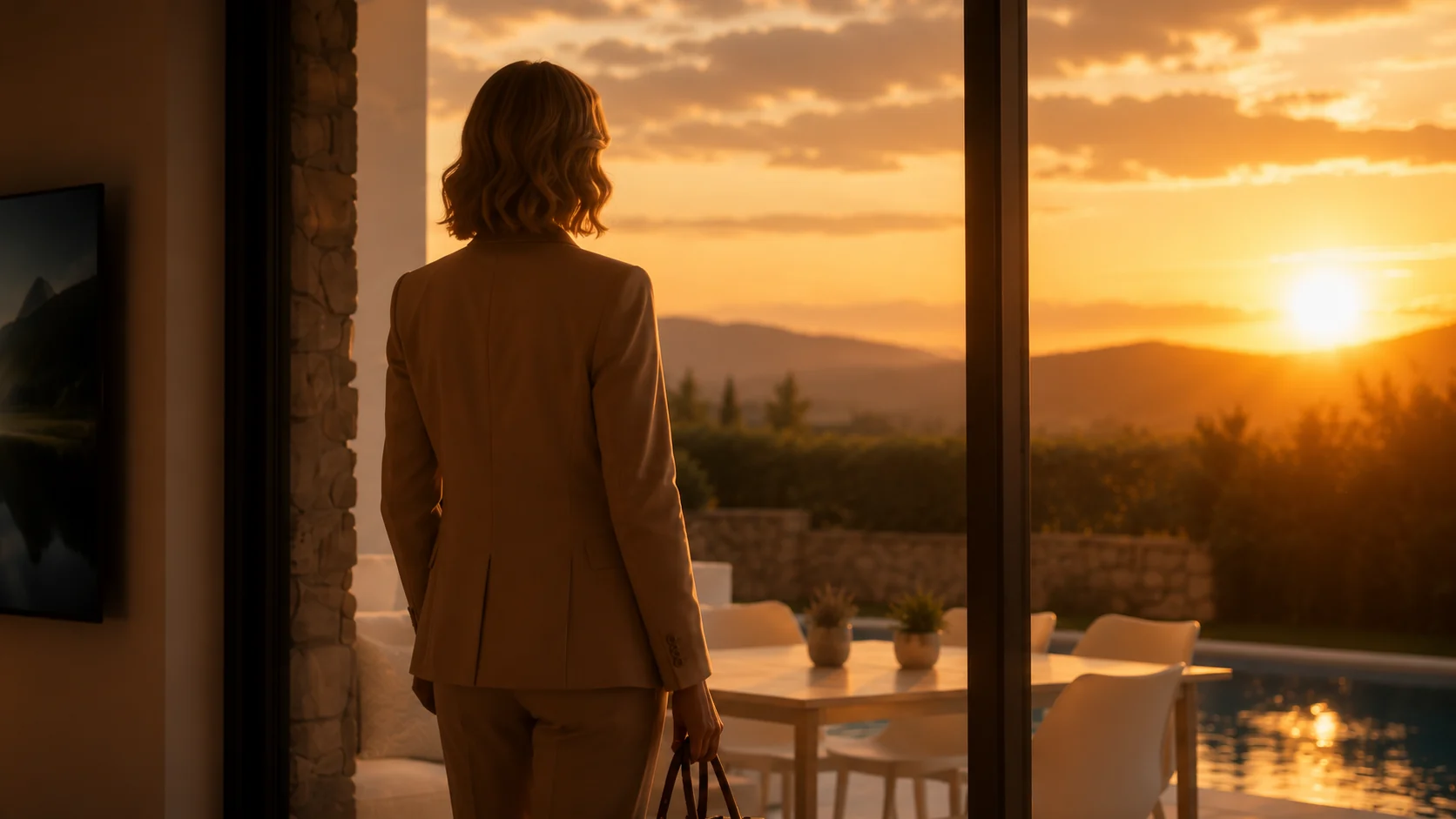
Daylight. A house at golden hour is a different house from the same house at noon. Film can show both and suggest that the property lives in time.
Human presence. A figure in frame gives a space measure and purpose. The buyer has someone to follow — and ends up following themselves.
Film as a tool, not an ornament
Cinematic presentation is not a last resort for properties that will not sell. It is a tool that changes who responds to the listing. When a film communicates the character of a house well, the viewings that follow come from people who already know what they are coming to see, and they arrive further along in their decision.
For an agent that means fewer viewings that lead nowhere. For an owner, less disruption. For a developer, one visual language that works on the website, in the campaign and in the investor presentation alike.
The Satori Visuals philosophy
Most property presentations show a space. We show the life that could unfold within it.
Every film is built on a single decision: what the buyer should feel when the video ends. Script, direction, light and edit all follow from it. We do not try to describe a property. We try to let it be experienced before anyone travels to see it.
